
Why Hermes Agent Forgets Task Context
How agent runs handle context today
A run gets its context at launch: your instructions, the goal, whatever files or tools it can reach. As agents work, they build understanding — this service owns that logic, this approach failed, this constraint matters — inside their own context windows. When the run completes, those windows are discarded. There's no store the run writes to, so the next run begins from your launch prompt again, however much the previous one learned.
The technical reason multi-agent makes it worse
Multi-agent systems multiply the problem instead of solving it. Each agent has its own context window; they don't share one. A handoff passes a message or a summary, not the reasoning behind it — so the receiving agent inherits a conclusion without the constraints that produced it. Parallel agents can duplicate the same investigation or reach conflicting decisions, because neither can see what the other established. And when the run ends, N agents' worth of learning disappears at once.
What this costs you
Every run pays a rediscovery tax, multiplied by the number of agents doing it independently. Decisions get re-litigated across runs, so the same rejected approach resurfaces next week. Handoffs lose fidelity, which shows up as work that's technically correct but violates a constraint established two steps earlier. And nothing compounds: your tenth run is no better informed than your first.
The Usual Workarounds (and Where They Stop)
Stuffing the launch prompt
The standard fix: front-load everything into the launch instructions — architecture, conventions, constraints, prior decisions. It works, and it's what most people do. But it's manual, it grows unwieldy, it costs tokens on every run whether or not each agent needs it, and it captures only what you remembered to include.
Keeping one long-running run
Staying inside a single run preserves context — until the window fills and compaction starts dropping the earliest details, which are usually the requirements. Long runs also make failure expensive: one bad step can compromise a lot of accumulated state.
Hand-written handoff notes and files
Writing status notes to disk between runs is a real, sensible workaround: what was done, what's decided, what's next. It's also fully manual, easy to skip under pressure, and produces prose the next run must re-read and re-interpret rather than query.
The shared wall: none of these gives agents a queryable memory that survives a run boundary or is shared across agents — the same root gap behind why OpenClaw forgets agent state and task context.
The Fix: Give Hermes a Persistent Task Memory
The durable setup is a memory layer outside the run that every agent can read and that outlives all of them. MemoryLake stores your project knowledge, decisions, and constraints once — searchable, versioned Git-style with conflict detection when two sources disagree, and end-to-end encrypted so your internals stay yours. It becomes the shared substrate multi-agent work has been missing.
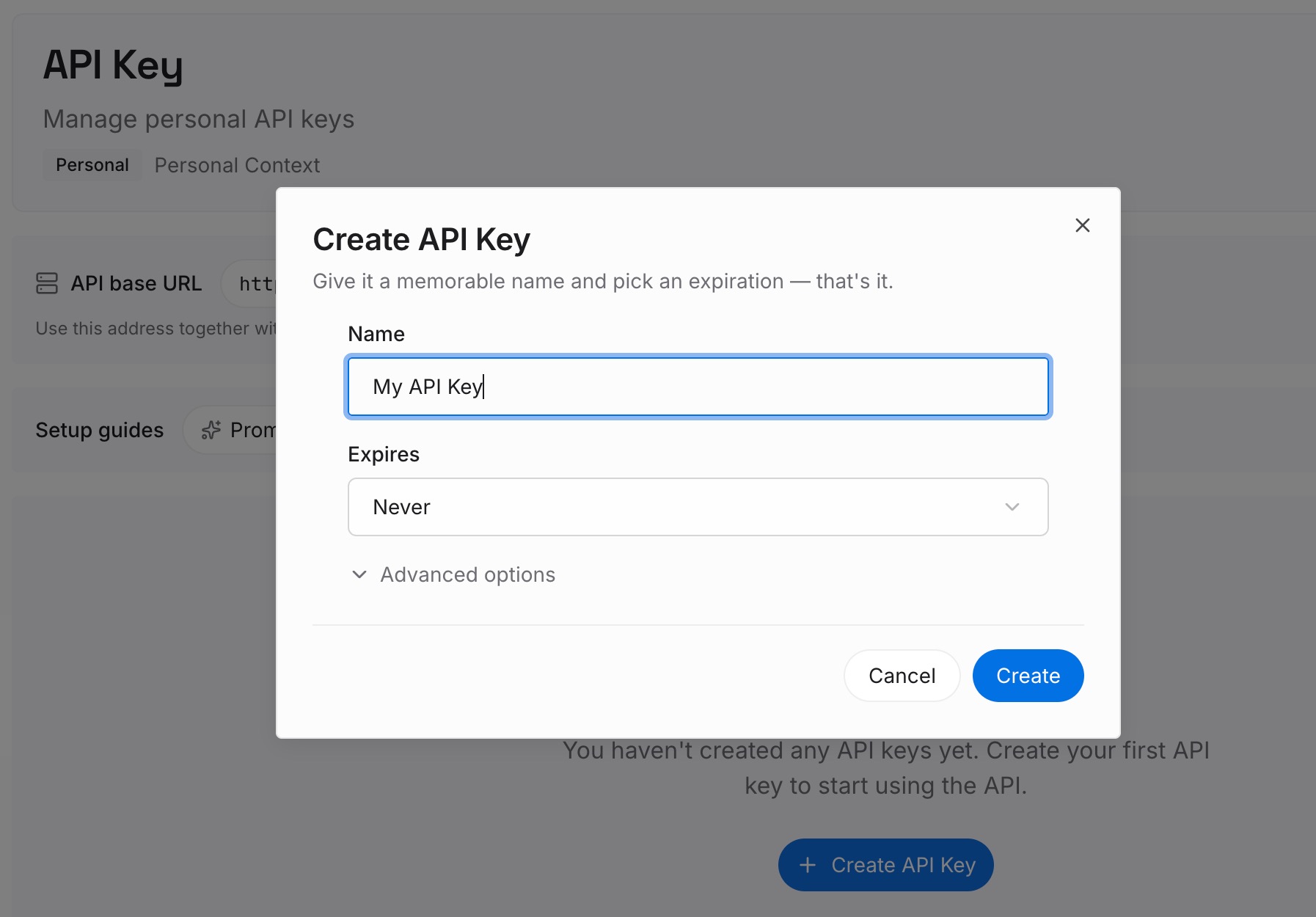
Step 1: Create an API key
Sign in to MemoryLake, generate a key, and make your first request — it takes about 30 seconds.
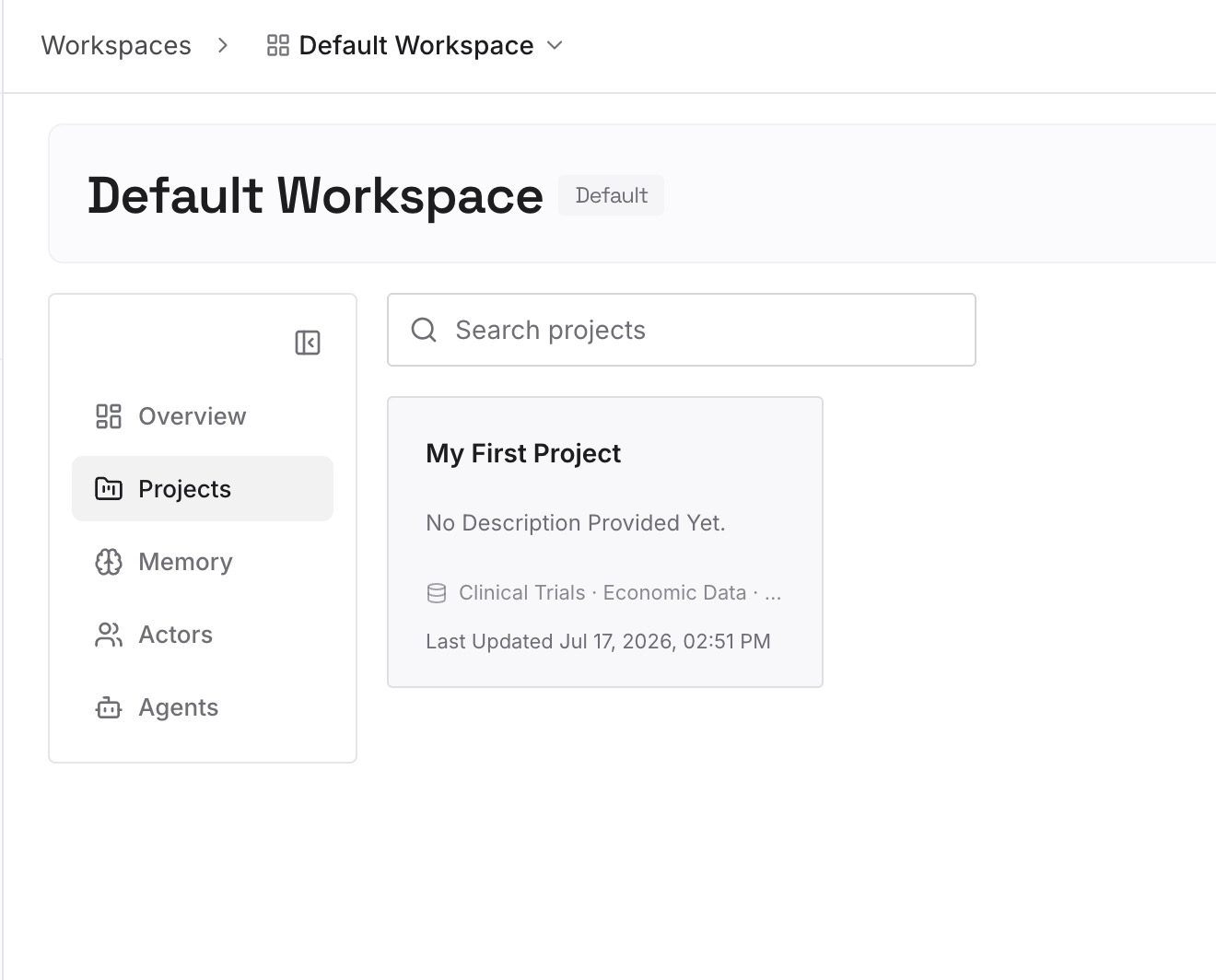
Step 2: Upload your first memories
Drop in what runs keep rediscovering: architecture and system docs, standing constraints, decision records, and runbooks — documents, images, and other files all work. Then capture each run's conclusions as one-line memories, so progress accumulates instead of resetting.
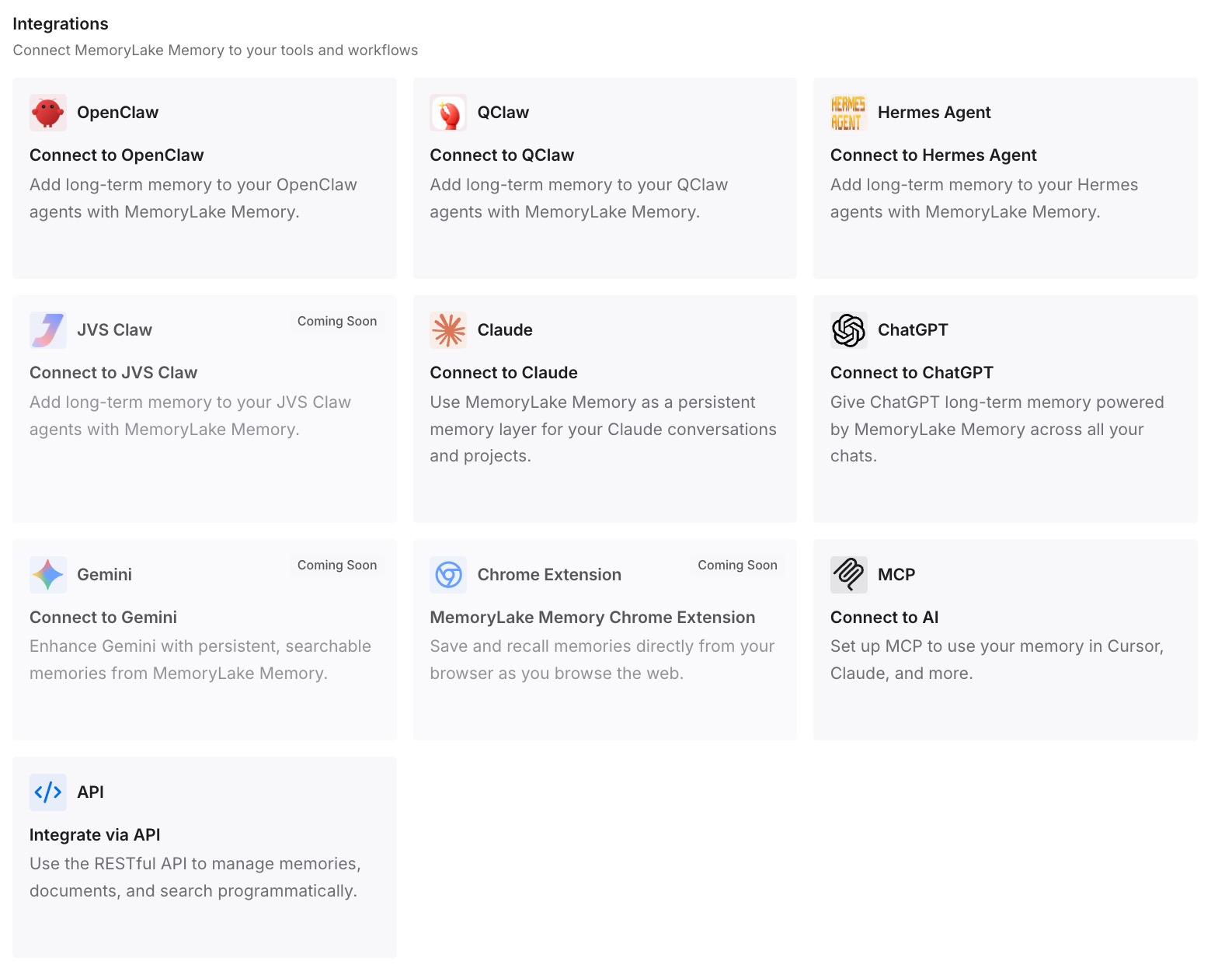
Step 3: Connect your AI & agents
Connect Hermes with your API key — MemoryLake supports Hermes Agent as a dedicated integration, so agents can retrieve shared context during a run instead of relying on what you pasted at launch. The same memory is available to Claude, Codex, OpenClaw, and other agents via MCP or the API, so a workflow spanning several tools still works from one set of facts.
What Rediscovery Actually Costs in Multi-Agent Work
The tax, multiplied by N
A single agent rebuilding context is one cost; five agents each rebuilding it in parallel is five. That's tokens and wall-clock time spent on the same rediscovery, plus the harder-to-price cost of two agents reaching decisions that contradict each other because neither could see the other's reasoning.
Retrieval instead of re-deriving
With a shared layer, each agent pulls exactly the constraint or decision its step needs, and handoffs carry a pointer to shared memory rather than a lossy summary. Runs start informed, agents stop duplicating investigation, and conflicts get caught rather than shipped — MemoryLake's Token Saving Calculator projects the token effect from your usage.
Best Practices for an Agent Task Memory
Write conclusions at the end of every run
One dated line per run — what was done, what was decided, what failed and why — is what turns isolated runs into cumulative progress. It's the automated version of the handoff note, in a form the next run can query.
Make constraints retrievable, not just prompted
A constraint that exists only in the launch prompt is one compaction away from being ignored. In retrievable memory, any agent at any step can check it.
Scope by workflow
One memory scope per workflow or project keeps retrieval sharp and prevents one pipeline's constraints from steering another's agents.
Conclusion
Hermes coordinates agents well; what it can't do alone is remember. Each run starts from your prompt, each agent sees only its own window, and everything learned disappears when the run ends — so multi-agent work rediscovers instead of compounding. Give the system a shared, persistent memory and that inverts: agents coordinate through common facts, handoffs stop losing reasoning, and run ten starts from nine runs of accumulated knowledge. Stop re-launching your agents into an empty room.